
Every few months, a new headline warns that artificial intelligence is coming for another profession. Hairdressing gets mentioned more often than you might expect — usually alongside a photo of a robotic arm holding scissors. So let’s address it directly: AI is not going to replace hairdressers. Here’s why.
Hairdressing Is a Physical, Adaptive Skill
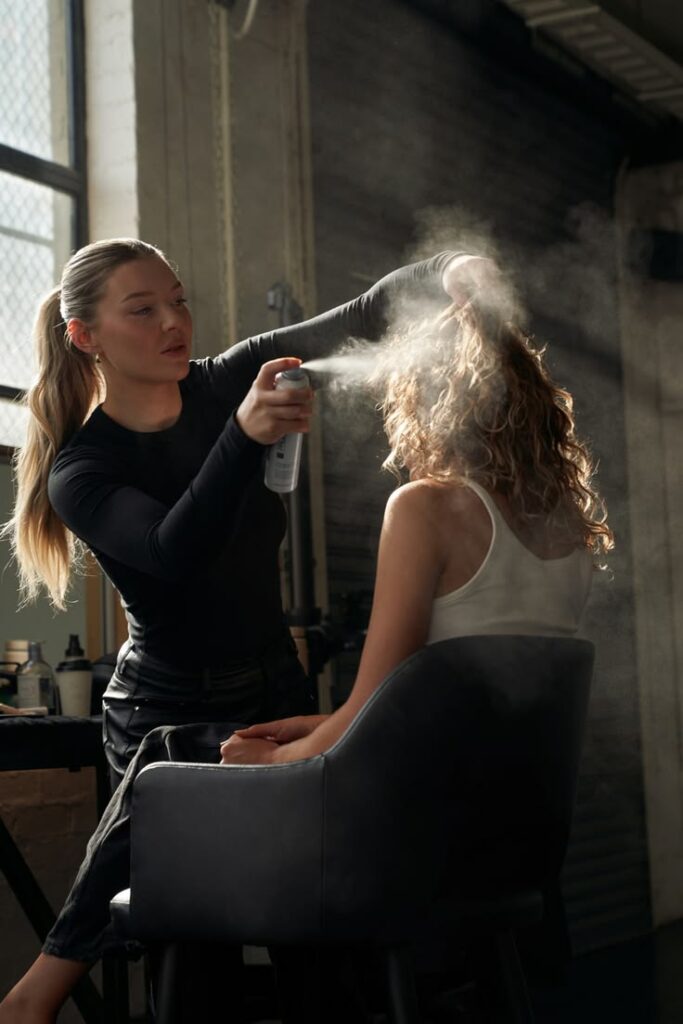
No two heads of hair are the same. Texture, growth pattern, density, how it falls when wet versus dry, how a client’s hair behaves in humidity versus a dry winter — a stylist reads and reacts to all of this in real time, with their hands, as they work. A pair of scissors doesn’t follow a script; a good cut adjusts itself dozens of times over the course of an appointment based on what the stylist sees and feels. That kind of moment-to-moment physical judgement isn’t something software executes. It’s something a trained person does.
A Consultation Is a Conversation, Not a Form
Ask any experienced stylist and they’ll tell you the real work often starts before a single cut is made. A good consultation involves listening — to what a client says they want, and often to what they mean underneath that. Someone might ask for “just a trim” while clearly wanting a fresh start. Someone else might bring in a photo that would never suit their face shape or lifestyle, and needs a stylist who can gently steer them somewhere better. That reading of a person, not just their hair, is relational. It’s built on trust, eye contact, and experience with real people — not a dataset.
Where AI Actually Helps
None of this means technology has no place in the industry. Colour formulation software, booking and scheduling tools, and AI-generated mood boards for inspiration are already useful in salons, including our own. Used well, these tools free stylists up to spend more time on the parts of the job that actually need a human — the consultation, the cut, the colour work, the finishing touches, the relationship with a returning client. Technology is a tool in the kit, not a replacement for the hands holding it.
The Craft Is the Career
This is part of why we train the way we do at La Louve — real salon experience alongside theory, from day one. It’s not possible to become a skilled colourist, cutter or stylist from a screen. It takes repetition, feedback from an educator standing next to you, and hundreds of hours of hands actually working on hair. That’s a craft, and crafts don’t get automated away — they get passed down, practised, and refined by the next generation of people willing to learn them properly.
If anything, in a world leaning more on screens and algorithms, the demand for real, skilled, in-person craftspeople — hairdressers included — isn’t going anywhere.